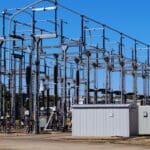


Substation automation is a crucial aspect of modern power systems management. Central to this technology are Intelligent Electronic Devices (IEDs), which play an instrumental role in optimizing the performance of the electrical grid. This blog post will explore the concept of IEDs, their types, and functions within a substation, and how they synergize with power management systems, distributed control systems, and programmable logic controllers.
Understanding Intelligent Electronic Devices (IEDs)
An Intelligent Electronic Device (IED) is a microprocessor-based controller of power system equipment, often inclusive of communication capabilities. These devices are engineered to receive or send data and control signals from or to an external entity, effectively acting as the ‘brain’ of the power system equipment.
Types and Functions of IEDs in a Substation
The classification of IEDs can be done based on their specific roles within a substation:
- Protection Relays: These are arguably some of the most critical IEDs in a substation. They are designed to detect faults in the power system and trigger corrective actions. These devices protect the electrical system from potential damage caused by overloads or faults. Their primary function is to maintain the stability and integrity of the power system, ensuring continuous and reliable power supply.
- Circuit Breaker Controllers: These IEDs are responsible for managing the operation of circuit breakers, devices that are crucial for interrupting current flow in the event of a fault. Circuit breaker controllers command the opening and closing of the circuit breakers based on the signals received from protection relays or supervisory commands from control centers.
- Metering Devices: These IEDs are dedicated to measuring various parameters such as voltage, current, power factor, and energy consumption. They provide essential data that helps operators monitor the performance of the power system and make informed decisions regarding system operation and control.
- Communications Processors: These IEDs manage the communication between devices within the substation and externally, including the control center or other substations. They are responsible for encoding, transmitting, receiving, and decoding data, ensuring smooth and effective communication within the power system.
Integrating IEDs with Power Management Systems, Distributed Control Systems, and Programmable Logic Controllers
Power Management Systems
In power management systems, IEDs collect real-time data on electrical parameters such as voltage, current, frequency, and power factor, and transmit this data to the control center. This information is crucial for various applications, including load shedding, peak demand management, and energy optimization strategies. The real-time data provided by IEDs allows for dynamic control of the power system, enhancing its efficiency and reliability.
Distributed Control Systems
In a distributed control system (DCS), IEDs act as localized controllers for specific parts of the power system. They communicate with the central DCS controller and execute its commands. This arrangement provides localized control and monitoring, which enhances the system’s responsiveness and flexibility. It also improves the reliability of the system as a failure in one part does not affect the overall system’s operation.
Programmable Logic Controllers
In systems equipped with programmable logic controllers (PLCs), IEDs provide input data for the PLC’s control algorithms. These algorithms use this data to control various processes within the substation, such as circuit breaker operation, transformer tap changing, and capacitor bank switching. This arrangement provides an automated and intelligent control of the substation, improving its operational efficiency and reliability.
Wrapping Up
Intelligent Electronic Devices (IEDs) are integral to substation automation, aiding in everything from protection and control to communication and measurement. Their ability to work seamlessly with power management systems, distributed control systems, and programmable logic controllers makes them indispensable in our quest for a more efficient and reliable power grid. By granting us greater control over our power systems, IEDs are paving the way for smarter, safer, and more sustainable energy management.